
You’ve got your fabric, floss, and maybe even your first project picked out — but when you open the pattern, it looks like… a mysterious grid of symbols and colors!
Don’t worry — that’s totally normal. Cross-stitch patterns can look confusing at first, but once you understand how to read them, they open up a whole new world of creativity.
In this guide, we’ll break down how to read a cross-stitch chart, what those symbols and color codes mean, and how to keep your stitching organized from start to finish.
Let’s decode your chart, one square at a time. 🪡
1. What a Cross-Stitch Chart Actually Shows
At its heart, a cross-stitch chart is just a map of stitches. Each square on the chart represents one stitch on your fabric.
- A symbol inside the square tells you which color of thread to use.
- The grid lines help you count and position your stitches.
- Most charts have darker lines every 10 squares to make counting easier.
Think of it like a pixelated picture — every X you make is a little “pixel” that adds up to your full design.
2. What the Symbols Mean
Each thread color in your pattern is represented by a unique symbol (like a dot, triangle, or letter).
You’ll find a color key or legend somewhere on the chart — usually along the side or bottom. That’s your pattern’s “dictionary.”
Here’s what a typical legend might include:
| Symbol | Color Name | Floss Number | Brand |
|---|---|---|---|
| ▪️ | Light Blue | 3755 | DMC |
| ✳️ | Pale Yellow | 3078 | DMC |
| ⬛ | Dark Green | 500 | DMC |
🧵 The legend tells you which color of thread matches each symbol and which brand it refers to (most often DMC, Anchor, or Cosmo).
Pro tip: If your pattern uses color blocks instead of symbols, print it in black and white to save ink — and use colored pencils to mark your stitches as you go!
3. Counting & Starting Your Stitching
Once you understand the symbols, the next step is figuring out where to begin.
- Most charts are centered, so find the center symbol on your pattern (usually marked by arrows or lines).
- Match that to the center of your fabric (fold in half both ways to find it).
- Start stitching from that point and work outward — this keeps your design balanced and helps prevent running out of fabric.
Tip: Highlight or mark off sections as you stitch. This helps you stay on track — especially with large or detailed designs.
4. Specialty Stitches, Backstitch, and Extras
Some charts include more than just plain cross-stitches. You might see:
- Backstitch lines: Thin lines outlining shapes or adding detail. Usually stitched last.
- French knots or beads: Tiny accents for texture.
- Half-stitches or quarter-stitches: Diagonal or partial stitches for smoother curves.
Don’t let these scare you — they’re just little finishing touches that make your piece pop! You’ll master them as you go.
5. Staying Organized
If you’ve got a chart with 10, 20, or even 50 colors (it happens!), staying organized is key.
Here are a few ways to keep your floss and symbols straight:
- Floss cards or bobbins: Label each with its color number and symbol.
- Project baggies: Great for keeping smaller projects together.
- Highlight as you go: Mark each completed section on your printed pattern.
Tip: Some stitchers keep two copies of their pattern — one for marking and one clean for reference. That way, if you frog a section, it’s easy to see what needs restitching.
Wrap-Up: Reading Your Chart Like a Pro
At first glance, a cross-stitch pattern looks like a secret code — but now you know how to read every symbol, count every square, and turn that grid into a work of art.
Once you’ve got this down, you can tackle almost any chart you find — from simple samplers to intricate full-coverage designs.
🐸 Until then, happy stitching — and may all your symbols line up perfectly!
Next in our Your First Stitches series:
👉 How to Choose & Organize Your Floss (Without Losing Your Mind)
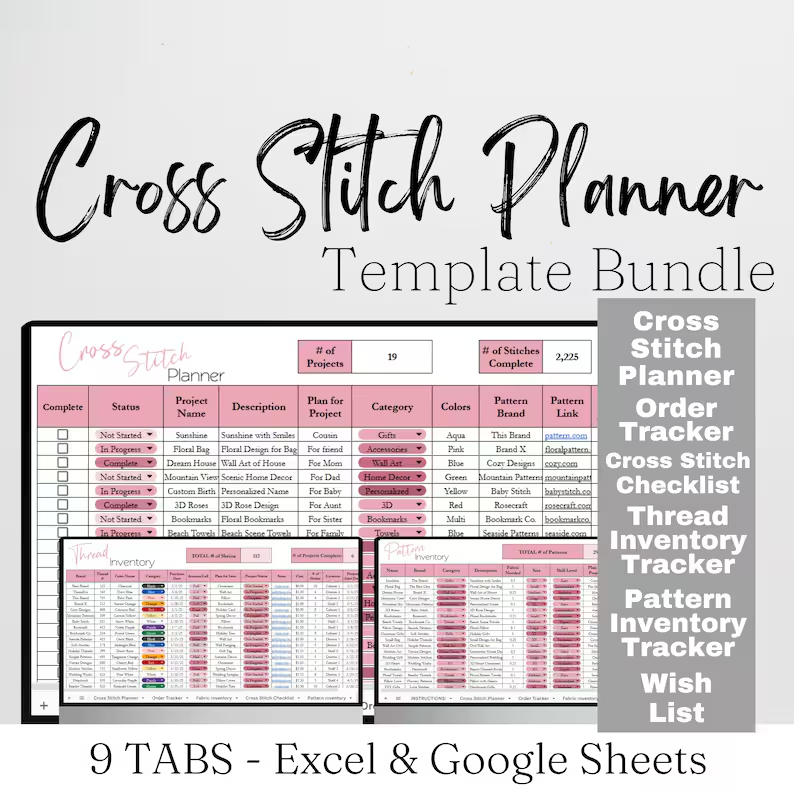
There is a myriad of organization products for stitchers out there like this spreadsheet that you can download from Etsy shop Savvy and Thriving.

You can get entire sets of floss holders like this set for DMC that includes numbered labels. Available from Incredible Stitching on Etsy.

Stitchy project bags are really popular. This one is from Fab Shabby Rose on Etsy, but you can also find makers who sell directly through their social media accounts.